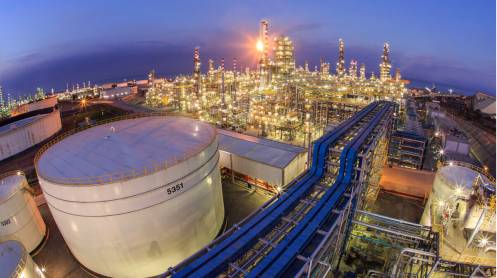
KARACHI: Pakistan’s four refineries have jointly urged the government to immediately withdraw the revised motor spirit (MS) pricing mechanism, warning that the imposition of a Rs49 per litre petroleum levy differential on local refineries could undermine their financial viability and jeopardise billions of rupees in investments committed under the Brownfield Refining Policy.
Thank you for reading this post, don't forget to subscribe!In a joint letter to the federal minister for petroleum, Attock Refinery Limited, Cnergyico PK Limited, National Refinery Limited and Pakistan Refinery Limited protested against unilateral changes to the MS pricing mechanism, which took effect on October 31.
The refineries said the revised mechanism calculates imported petrol prices using actual or last available Pakistan State Oil (PSO) cargo costs, while keeping the premium, incidental expenses and customs duty components allowed to local refineries frozen at their March 7, 2026 levels.
Under the new arrangement, local refineries are required to surrender the resulting difference of Rs49.02 per litre as petroleum levy without receiving a corresponding adjustment in their entitled ex-refinery prices.
They argued that the decision fails to account for sharp increases in crude sourcing, freight, insurance, financing and other related costs amid the ongoing Iran-US war. Restricting petrol pricing components to pre-war levels, they warned, would deprive local refineries of cost-reflective returns, potentially making domestic petrol production financially unviable, disrupting supplies and delaying planned refinery upgrades.
The refineries also maintained that the decision was inconsistent with commitments made under the Brownfield Refining Policy and the binding upgrade agreements signed with the government.
Referring to Clause 7 of the agreements, they said the policy framework, including fiscal incentives and timelines, was protected during the implementation of upgrade projects. Clause 8.1 provides for an incremental deemed-duty incentive on motor spirit to finance refinery modernisation, while Clause 22.2 requires any amendments to the agreements to be made in writing and signed by the parties.
According to the refineries, compulsory surrender of the levy differential would substantially erode their financial returns and undermine the investment framework established to facilitate the country’s refinery upgrades.
They further pointed out that previous changes to the pricing formula had been made after consultation with refineries, whereas the latest decision was imposed without giving them an opportunity to present their concerns.
The representation also highlighted an apparent inconsistency between the cabinet’s direction, which allows pre-war refinery pricing components to remain applicable for 30 days, and the petroleum levy notification, which remains in force until further orders.
The refineries said the open-ended nature of the notification had created uncertainty for investors and threatened the continuity of their upgrade programmes.
While reaffirming their commitment to consumer protection, reliable fuel supplies and the timely completion of modernisation projects, the companies said the cost of providing relief to consumers should not be shifted exclusively onto refineries at the expense of their financial sustainability and agreed investments.
They requested the petroleum minister to immediately withdraw the March 7 pricing freeze and the related differential surrender, restore the pricing formula that existed before October 31, and direct the Oil and Gas Regulatory Authority (Ogra) to implement corrective measures.
The four refineries also sought an urgent meeting with the petroleum minister during the current week to explain the potential impact of the revised mechanism.
Meanwhile, Pakistan Arab Refinery Limited (Parco) will also write separately to the government regarding the revised petrol pricing mechanism, sources told The News.
Story by Tanveer Malik